
Saturday, July 9, 2011

Friday, June 3, 2011
How Much Is Social Media Actually Costing You To Manage Yourself?
Is your business on Facebook, Twitter, LinkedIn? Do you spend a fair amount of time updating your posts and pages to inform and connect with customers? Then it may be time to assess how much participating in social media is costing your business and whether it’s a good use of your time.
Social Media is Free, Isn’t It?
If you’ve hired a social media professional to handle your business’s presence on the most popular sites, you know the hard costs of promoting your products and services, or establishing your brand and expertise, online.
But what if you handle social media yourself? Most small business owners and entrepreneurs do, but that doesn’t mean social media is free.
Social Media’s Opportunity Cost to Your Business
Remember when your economics professor covered the concept of opportunity cost? Everything we do has a cost, even social media. One way to determine that cost is to access what your potential earnings would be if you used the time you invest in social media to focus on activities that will drive revenue for your business.
Ironing Shirts and Opportunity Cost
The best way I ever heard opportunity cost defined was listening to two business associates argue about whether or not they should iron their own dress shirts or send them out to the laundry. One guy insisted that ironing his shirts himself was well worth his time, since he liked the way they felt when he wore them much better than the stiffer laundry-ironed variety.
But his peer asked him a few simple questions: 1) How much does the laundry charge to iron one shirt? Answer: $3.00 per shirt. 2) How much do you earn per hour? Answer: $43.00 per hour. 3) How many shirts can you iron in an hour? Answer: 3.
Doing the math, it was costing the guy who ironed his own shirts $14.33 per shirt based on the fact that he could be spending his time – and valuable time at that – doing other things. If he’d sent his shirts out to the laundry, three shirts would cost him $9; but doing them himself cost him $43 – almost 500% more.
Evaluating the Cost and Worth of Social Media for Your Business
So what does all this mean for your business? Using a simple method of assigning value just for argument’s sake, and leaving out the varied nuances and complexities of undefined ROI and brand value social media brings to your company, let’s see how much it costs a small business owner or entrepreneur to handle their own social media.
Assumptions:
Business Owner A earns a net income of $40,000
Business Owner B, $70,000
Entrepreneur A, $100,000
Entrepreneur B, $120,000
If they each work 50 hours per week, their hourly wages roughly come to $15, $27, $39, and $47 respectively.
Assumptions:
Business Owner A earns a net income of $40,000
Business Owner B, $70,000
Entrepreneur A, $100,000
Entrepreneur B, $120,000
If they each work 50 hours per week, their hourly wages roughly come to $15, $27, $39, and $47 respectively.
The following chart estimates the opportunity cost each of them invest if they devote one, two, or three hours a day to social media.
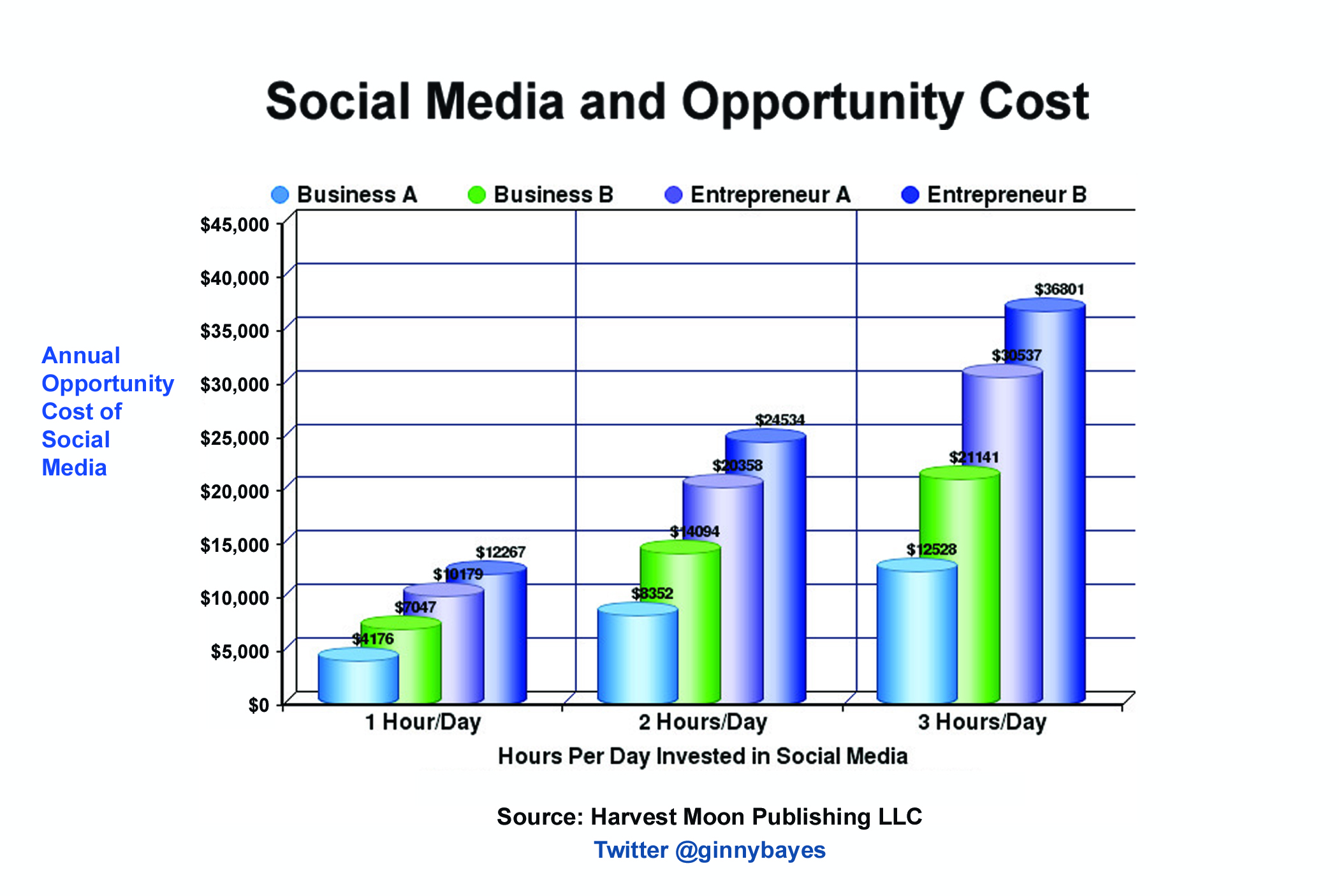
An Hour a Day of Social Media Can Cost $12,267 Every Year
As you can see, investing only one hour a day toward social media can have real costs:
Business Owner A - $4,176
Business Owner B - $7,047
Entrepreneur A - $10,179
Entrepreneur B - $12,267
Business Owner B - $7,047
Entrepreneur A - $10,179
Entrepreneur B - $12,267
Three Hours a Day of Social Media Can Cost $36,801 Every Year
Business Owner A - $12,528
Business Owner B - $21,141
Entrepreneur A - $30,537
Entrepreneur B - $36,801
Business Owner B - $21,141
Entrepreneur A - $30,537
Entrepreneur B - $36,801
Making Social Media Profitable for your Company
It may be time to hire a social media professional to take care of your online presence for you. Only you can decide what your time is worth and how best to spend it for your company. Call us today @ 760-799-5417
Sunday, May 22, 2011
New Social Media Tactics Every Small Business Should Consider

Starting or maintaining a small local business is no easy task. This is especially the case when you offer a product or service that is provided by major players that are hard to compete solely on price with. For every story of a mom and pop shop that has fought off the corporate giants, there are hundreds that did not share the same fate.
However times are changing, and technology is providing opportunities that were never even thought possible just a few short years ago. While a well thought out digital marketing plan is a given, I feel there are 3 key things a small business or start up can do today that can build customer loyalty.
1. Exclusive Couponing – As a consumer who has used the likes of Groupon, and LivingSocial, I can tell you with certainty that it works. I have tried numerous new products and services from businesses I had neither heard of or would have considered. Get your business on one of these sites for a day, and you are destined to drive significant business your way and if you truly have a great product or service, repeat customers.
2. Location Based Rewards – I love the idea of Foursquare, Whrrl, and Gowalla I wish I wanted to use them more, but the reality is, unless I have incentive to, I just don’t find myself using them as much. However as businesses have started to offer rewards to users who check-in, that likelihood changes dramatically. If I were a local business, I would immediately partner with these companies and get an offer on the table, and window decals advertising the fact.
3. Reputation/Review Sites – I find myself using Yelp more and more to make service based buying decisions. It’s scaling, and there’s nothing more trustworthy then the opinions of the masses. I love businesses that have window decals showing they are listed on Yelp. It tells me that they care about what people say about them which usually results in good service and product. I would take it one step farther and offer incentives to customers to leave feedback. If you can work a nice Yelp rating, it will pay off in spades. Similar sites like Urbanspoon (for restaurants), and Google (off there map searches) are other areas I’d have businesses concentrate on building a strong reputation on. Embrace user feedback and good things will happen.
Tuesday, May 10, 2011
Looking for Fresh Topics for your Blog?
Here are some ideas:

* Read your competitors.
- The next time you are drawing a blank with your next blog topic, surf the Internet for what others in your niche are writing about. It does not mean you are stealing ideas from others, but use the topics to develop an idea and get inspired.
- The next time you are drawing a blank with your next blog topic, surf the Internet for what others in your niche are writing about. It does not mean you are stealing ideas from others, but use the topics to develop an idea and get inspired.
* Get a critique.
- Any writer can find criticisms to be the building blocks of a good blog. Have a mentor to teach you the ropes, and learn from them as they point out what makes your blog good or bad.
- Any writer can find criticisms to be the building blocks of a good blog. Have a mentor to teach you the ropes, and learn from them as they point out what makes your blog good or bad.
* Do an interview.
- A simple and quick Q&A will bring some new ideas to the table worth tacking on. Take note not only of the answers , but also the questions that you want to ask, because it may be in itself a great topic to write about.
* Have a deliberation.
- Sometimes conflict can bring about new topics you can write about. It is good to have someone who is strong with their opinions and will argue with you over it.
* Make use of a popular post.
- Capitalize on an established blogger’s thoughts by posting your reaction to their latest blog topic. You will not only have something to write about, but also attract some traffic to your own blog.
* Read comments.
- Reply to those comments directed to you. Whenever you can, look at other blog's comments and see what other readers have to say. Write down their views and questions.
* Have a guest blogger
- Sometimes, having someone write a post for you takes the pressure off and gives you time to recuperate from all the thought-process you’ve been doing. A different perspective is also refreshing.
* Ask for ideas.
- Let your online social connections do the work for you. Ask for ideas on facebook, twitter, and so on; most likely, a lot of people will oblige.
- A simple and quick Q&A will bring some new ideas to the table worth tacking on. Take note not only of the answers , but also the questions that you want to ask, because it may be in itself a great topic to write about.
* Have a deliberation.
- Sometimes conflict can bring about new topics you can write about. It is good to have someone who is strong with their opinions and will argue with you over it.
* Make use of a popular post.
- Capitalize on an established blogger’s thoughts by posting your reaction to their latest blog topic. You will not only have something to write about, but also attract some traffic to your own blog.
* Read comments.
- Reply to those comments directed to you. Whenever you can, look at other blog's comments and see what other readers have to say. Write down their views and questions.
* Have a guest blogger
- Sometimes, having someone write a post for you takes the pressure off and gives you time to recuperate from all the thought-process you’ve been doing. A different perspective is also refreshing.
* Ask for ideas.
- Let your online social connections do the work for you. Ask for ideas on facebook, twitter, and so on; most likely, a lot of people will oblige.
Monday, April 11, 2011
Make Time To Engage Your Audience On The Social Media Networks
Regardless of whether your business is comprised of one person or one thousand, finding additional time, money, and people to carry out new plans and initiatives is difficult. But, what if adding a social media engagement component to your business plan could yield new customers and increased sales to established fans? You would make the time! But how?
First, social media should be seen as a component of, not a substitute for, a replacement of, or an addition to your marketing and business plans. Whenever you, your marketing director or group sits down to consider the marketing plans for the next quarter, six months or year, you should be asking yourself, "What should we be doing to incorporate our social media strategy into this sale, event, or promotion." If you are leaving social media out of these discussions, you are creating more work for yourself or your team later on. Even worse, your social media engagement strategy looks to be an afterthought to those who follow you. That haphazard approach will cause you to lose followers and fans.
Second, once you have incorporated social media into your marketing plan, create a schedule to track how and where you are going to engage your followers and fans. How many times a day are you going to post or tweet? What are you going to say? How often are you going to repeat important information? Does this promotion require a blog post to be written? When will you post it? Create a calendar that schedules each tweet and post and follow it religiously. If you plan in advance, you will save time that would otherwise be spent trying to come up with something on the fly. Plus, being consistent will keep your followers and fans engaged.
Remember, social media engagement encourages a conversation with followers and fans, not just advertisements and sales pitches. These conversation starters should be a part of this schedule, with the idea that you need to be sharing information and knowledge as well as asking your customers for feedback on how your product or services can improve.
Third, keep on top of questions, comments and complaints that come via your social media sites. This can be relatively easy, without having to sit in front of your computer, monitoring each site 24 hours a day. Facebook and blogs can be set up to notify you via an email when someone posts on your wall responds to a post you made. You can receive a text message when when someone "mentions" you on Twitter. Use the notification tools that are provided by social media sites to save yourself time.
Fourth, don't feel obligated to engage in every conversation, answer every question, or respond to everycomment. Often, the same question may be asked by several different people- you only need answer once. Schedule 5 minutes or so a few times during the day to respond to comments and group your response to several comments into one post. These can be the same times of the day you have scheduled to make posts based on your social media engagement schedule.
Fifth, always respond to complaints as quickly as you possibly can. Don't let complaints hang out there prompting ongoing conversations and more complaints. When a complaint comes through, act on it just like you would with a customer who is there in front of you- immediately.
By considering social media a part of your normal operating and marketing procedures and inserting engagement into your plans and daily routine, scheduling ahead of time, you'll find that you will have time to both engage with followers and fans and carry out daily tasks while appearing to your online audience as being consistently and constantly engaged. www.b-social.net
First, social media should be seen as a component of, not a substitute for, a replacement of, or an addition to your marketing and business plans. Whenever you, your marketing director or group sits down to consider the marketing plans for the next quarter, six months or year, you should be asking yourself, "What should we be doing to incorporate our social media strategy into this sale, event, or promotion." If you are leaving social media out of these discussions, you are creating more work for yourself or your team later on. Even worse, your social media engagement strategy looks to be an afterthought to those who follow you. That haphazard approach will cause you to lose followers and fans.
Second, once you have incorporated social media into your marketing plan, create a schedule to track how and where you are going to engage your followers and fans. How many times a day are you going to post or tweet? What are you going to say? How often are you going to repeat important information? Does this promotion require a blog post to be written? When will you post it? Create a calendar that schedules each tweet and post and follow it religiously. If you plan in advance, you will save time that would otherwise be spent trying to come up with something on the fly. Plus, being consistent will keep your followers and fans engaged.
Remember, social media engagement encourages a conversation with followers and fans, not just advertisements and sales pitches. These conversation starters should be a part of this schedule, with the idea that you need to be sharing information and knowledge as well as asking your customers for feedback on how your product or services can improve.
Third, keep on top of questions, comments and complaints that come via your social media sites. This can be relatively easy, without having to sit in front of your computer, monitoring each site 24 hours a day. Facebook and blogs can be set up to notify you via an email when someone posts on your wall responds to a post you made. You can receive a text message when when someone "mentions" you on Twitter. Use the notification tools that are provided by social media sites to save yourself time.
Fourth, don't feel obligated to engage in every conversation, answer every question, or respond to everycomment. Often, the same question may be asked by several different people- you only need answer once. Schedule 5 minutes or so a few times during the day to respond to comments and group your response to several comments into one post. These can be the same times of the day you have scheduled to make posts based on your social media engagement schedule.
Fifth, always respond to complaints as quickly as you possibly can. Don't let complaints hang out there prompting ongoing conversations and more complaints. When a complaint comes through, act on it just like you would with a customer who is there in front of you- immediately.
By considering social media a part of your normal operating and marketing procedures and inserting engagement into your plans and daily routine, scheduling ahead of time, you'll find that you will have time to both engage with followers and fans and carry out daily tasks while appearing to your online audience as being consistently and constantly engaged. www.b-social.net
Monday, March 28, 2011
Social Media-Website Rule #1
#1: Add social media buttons to your home page
A few years ago, the idea of sending people to another site from your home page after you had worked so hard to get them there in the first place seemed boneheaded. However, many companies now see the long-term benefits of gaining a follower, fan or subscriber on a social media platform, even weighed against the short-term risk of sending them away from the website.
Unsolicited Advice: If you’re concerned about losing that prospect, consider having the site open in a new tab or window, keeping your own website available for later viewing.By getting someone to follow you on Twitter, become LinkedIn with you or subscribe to your YouTube channel, you have the opportunity to keep the lines of communication open long after they’ve left your website. www.b-social.info
Subscribe to:
Posts (Atom)